
Damp proof course: what is involved?
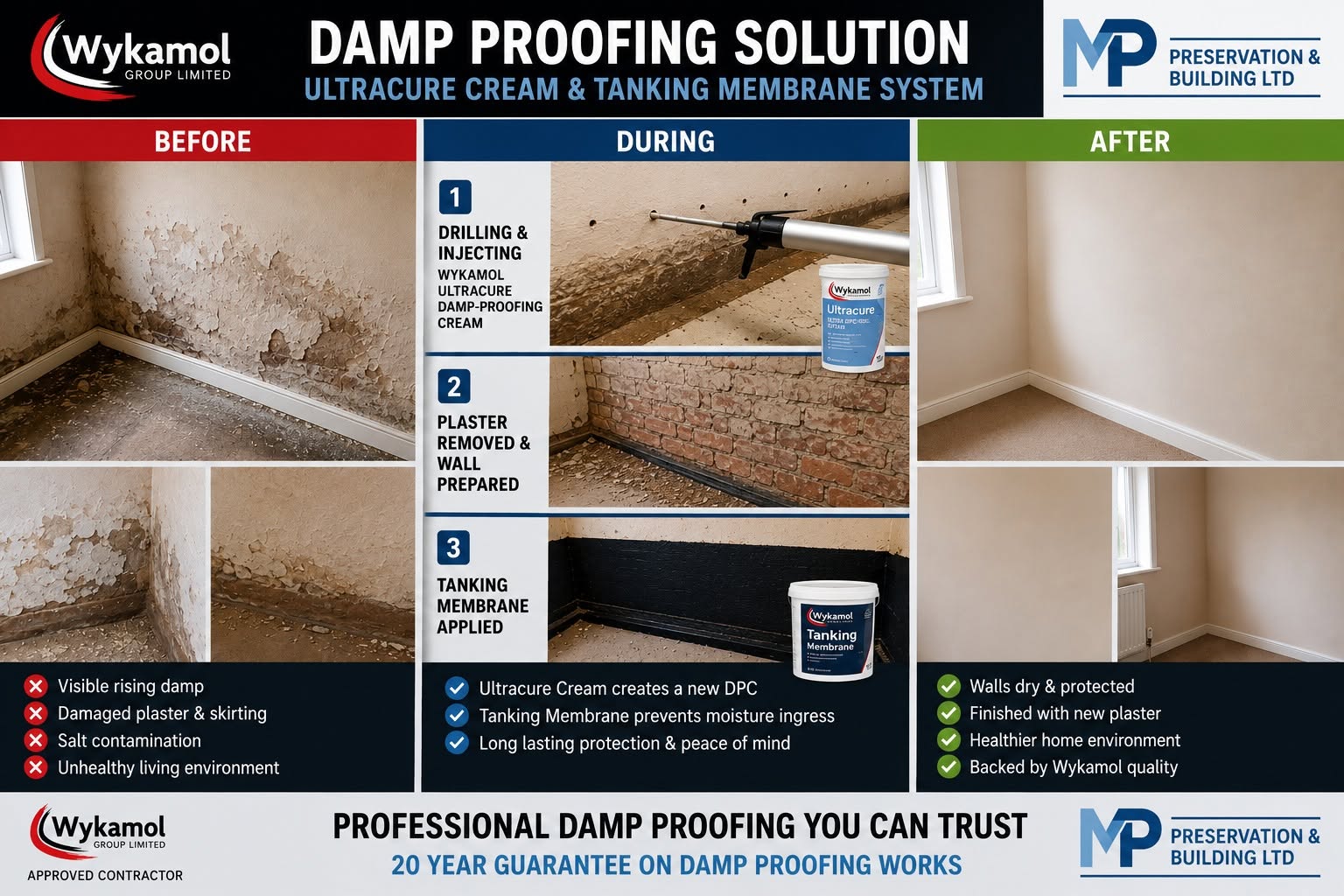
Damp proofing has a reputation for being disruptive and vague, mostly because homeowners are rarely told what the work actually involves. It is a defined sequence, and every stage has a purpose. Here is how a typical job runs when we install a new damp proof course in a North East property.
The first stage is inspection. We check the affected walls, take moisture readings, look at the external ground levels and confirm the cause before anything is priced. That is the part covered by our damp survey reports, and it matters because rising damp, penetrating damp and condensation all look similar on a wall but need completely different work. If the cause turns out to be a blocked gutter or a bridged damp proof course, we will say so rather than quote for a treatment you do not need.
Next comes preparation. Damaged or salt contaminated plaster is removed where required to expose the brickwork. Old plaster holds hygroscopic salts drawn out of the wall over years, and leaving it in place is one of the most common reasons a treated wall appears damp again months later. Floors and furniture are sheeted, and the debris is cleared as we go.
The damp proof course itself is then installed. Small holes are drilled into the mortar course at set centres and a specialist damp proofing cream is injected. The cream spreads through the mortar and cures to form a water resistant barrier across the wall, stopping groundwater travelling upwards. This is the core of the work described on our damp proofing page, and we install it as a Triton approved contractor using systems that carry a manufacturer backed guarantee.
Where required, a tanking membrane is fitted for additional protection against moisture. This tends to apply to basements, cellars, retaining walls and any wall where ground sits against masonry. The membrane isolates the finished surface from residual moisture in the structure, so the new plaster stays sound while the wall behind continues to dry.
Once the system is installed, the walls are prepared, boarded where necessary and replastered to a salt resistant specification, ready to decorate. That finishing work is carried out by our own team and is covered under plastering and dry lining, so there is no waiting on a separate trade to come back and close the job out.
The last stage is drying, and it is the one that needs patience. Treated walls need time to dry naturally before decorating, and how long depends on wall thickness, the season and how well the room is ventilated. We will tell you a realistic timescale on the day and advise on heating and airflow while the wall settles. Painting too early is the most common cause of a finish that blisters a few weeks later.
We carry out the full process, from identifying the cause through to the finished plasterwork, across North Shields, Tynemouth, Whitley Bay, Newcastle and the wider region. You can confirm your location on our areas we cover page, or see recent jobs on our latest work page.
Damp problems in your property? Get in touch to arrange an inspection and a written quotation. The survey and the quotation are both free.