
What happens during a damp survey
What the surveyor does, the equipment they use, what the readings mean, and the questions worth asking before you book anyone.
What happens during a damp survey
A damp survey has one job: to find the cause of the damp, not just confirm that a wall is wet. The surveyor will start by asking what you have noticed, where and when. Damp that gets worse after rain points one way, damp that is worse in winter mornings points another.
Inside, they look at the affected walls, floors and ceilings, take readings at different heights and look for patterns such as tidemarks, salts, mould and rot. Outside, they look at ground levels, the DPC line, gutters and downpipes, pointing, render, sills and the condition of the roof where it can be seen. Many damp problems are solved outside the house.
The equipment a surveyor uses
Moisture meter
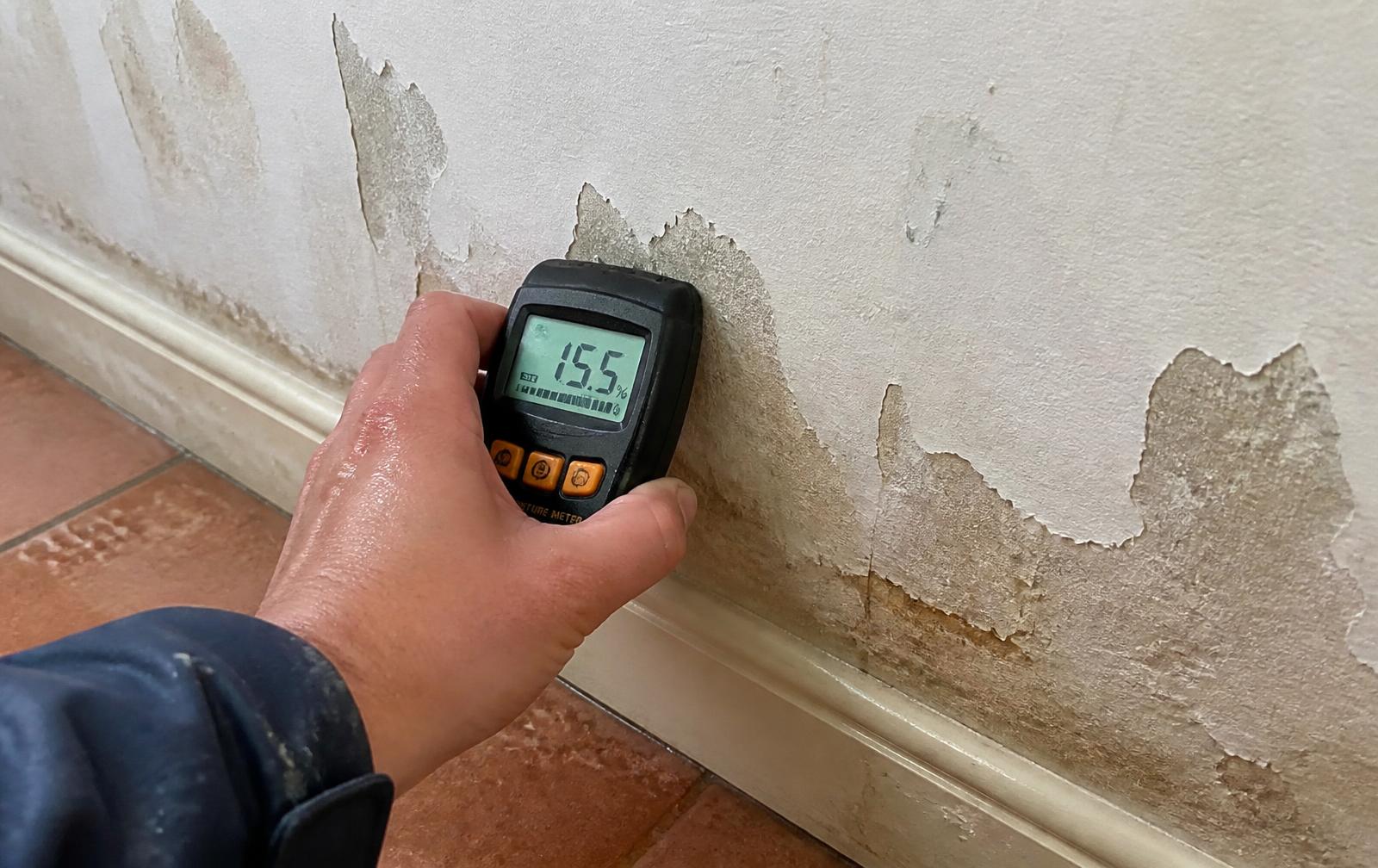
The most common tool. A pin meter measures electrical resistance between two prongs pressed into the surface. A non invasive or capacitance meter is held flat against the wall and reads through the surface. Both are quick and useful for mapping where the damp is.
Hygrometer
Measures the temperature and relative humidity of the air. Combined with a surface temperature reading, it tells the surveyor whether conditions in the room are causing condensation.
Surface thermometer and thermal camera
Shows cold spots on walls and ceilings where condensation forms, and can help trace missing insulation or leaks.
Other checks
Where needed, a surveyor may lift a floorboard to check joists and the floor void, probe timbers for rot, or take a small sample of masonry to test for actual moisture content and salts.
What the readings mean
This is where a lot of confusion comes from. Electrical moisture meters are calibrated for timber. On plaster and brick, the number on the screen is a relative reading, not a true moisture percentage. Salts in the wall conduct electricity, so a salty but dry wall can read high.
A good surveyor uses the readings to find a pattern rather than relying on one number. Readings that are high at the base of a wall and fall off with height suggest rising damp. Patches at random heights suggest penetrating damp or a leak. High readings only on the surface, with dry masonry behind, point to condensation. If the pattern is unclear, further tests are used before anything is recommended.
How long a damp survey takes
A survey of one or two affected rooms usually takes under an hour. A whole house, or a property with several problems, takes longer. You do not need to move furniture, but it helps if the surveyor can get to the walls you are worried about and to the outside of the house.
What the report will tell you
You should get a written report, not just a verbal opinion. It should say:
- Which areas were inspected and which could not be reached
- What was found, with readings and photographs
- The cause of each problem, in plain words
- What work is needed, including anything outside the house or that you can do yourself
- A clear price for the work
Our damp survey reports follow this format (see what a damp survey costs), and the price we give does not change once work is agreed.
Mortgage lender damp report versus a full survey
When you buy a house, the lender's valuer or your building surveyor may note high damp readings and recommend a specialist report. That report is usually needed before the lender will release the mortgage, and it is often done to a tight deadline.
A mortgage report concentrates on the areas the valuer flagged and gives a cost for any work so the lender and buyer can decide. A full damp survey looks at the whole property and the causes behind each problem. If you are buying an older house, it is worth asking for the wider survey, because the valuer only flags what they happened to test. We cover this in more detail in our advice articles.
What to ask a surveyor before you book
- Is the survey free, and is there any obligation?
- Will I get a written report with readings and photographs?
- Will you tell me if the problem is something simple I can fix myself?
- Are you accredited? We are CHAS Elite accredited, a Triton Approved Installer and a Wykamol Approved Contractor.
- Does the person surveying also carry out the work, or is it subcontracted?
- Is the price fixed once agreed?
- What guarantee do you give, and does it transfer if I sell?
If you already know the cause and want to read about the treatment, see our damp proof course guide or our damp proofing service. We survey across North Shields, Newcastle, Gateshead, South Shields and the wider area.
Frequently asked questions
Book a free damp survey
Ring us and we will arrange a visit. You get a written report with readings, the cause in plain words, and a fixed price.