Repointing brickwork: signs your mortar needs attention
Mortar joints do more than make brickwork look tidy. They help the wall shed rain and accommodate small movements between bricks. When mortar wears away, cracks or separates from the brick edges, water can find a route into the fabric. On exposed North East properties, a wall that looks fairly sound from the pavement may have open joints around windows, beneath sills or on the elevation that takes the strongest weather.
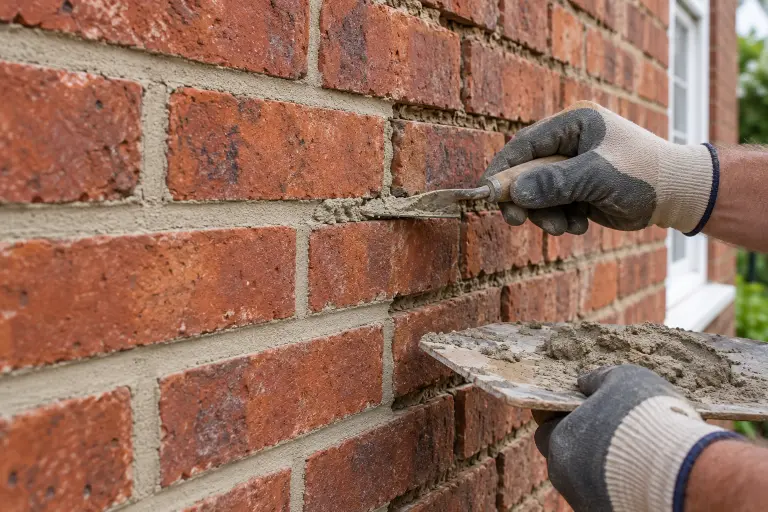
The updated service photograph shows fresh mortar being pressed into a prepared brick joint. This is the finishing stage of repointing, not simply a coating over the wall. Defective mortar has to be removed carefully so the new material can bond within a sound joint. Smearing mortar across the face may hide gaps briefly, but it does not provide the same repair and can make later maintenance harder.
Look for recessed joints, loose grains of mortar below the wall, visible gaps and cracks where mortar meets the bricks. Persistent damp patches inside after rainfall can be another reason to investigate. Check from ground level rather than climbing to reach high areas. Bulging masonry, displaced bricks or significant cracking need a professional assessment, because the problem may extend beyond the pointing. Our repointing service explains the repair work once the cause is established.
Coastal homes in Tynemouth and Whitley Bay can face wind driven rain, while exposed walls further inland also need attention. The condition of each elevation matters more than assuming the whole house has deteriorated equally. Sheltered joints may remain sound while a weather facing wall needs repair. A survey helps separate local defects from an elevation that genuinely needs more extensive repointing.
Choosing the mortar is just as important as the workmanship. Older brickwork may need a lime based mix that is compatible with softer masonry and allows moisture to move appropriately. A hard, unsuitable mortar can leave the bricks taking the damage instead of the joints. Colour and joint profile matter too, but an attractive match is not enough if the material is wrong for the building. Listed properties or buildings in conservation areas may also require consent or additional advice.
Preparation should avoid unnecessary damage to brick edges. The joints are cleared to a suitable depth, loose material removed and the masonry prepared for the chosen mix. Fresh mortar is placed and finished to suit the existing wall, then protected while it cures. Weather affects the work: frost, heavy rain and rapid drying can all harm a new joint. The specification and conditions determine the programme, rather than a promise to complete every wall in the same timescale.
Repointing is not a cure for every damp patch. Leaking gutters, damaged flashings, high external ground levels and condensation can produce similar symptoms. Horizontal cracks can also warrant checks for wall tie problems. Our damp survey reports help identify whether rain penetration, another defect or a combination of issues is responsible before repairs are priced.
If moisture has already damaged internal plaster, deal with the external source before planning the finish. The wall may need time to dry, and salt affected plaster may require a suitable replacement rather than another coat of paint. We can assess the masonry alongside any necessary damp proofing or plaster repairs. For homes in North Shields, Newcastle and nearby towns, book a free survey to establish what needs attention and what can be left alone.
Common questions
Concerned about open joints or rain getting through your brickwork? Arrange a free survey and we will explain the cause and the appropriate repairs.