Rising damp or condensation? How to tell the difference
It is one of the most common mix ups we see. A wall looks damp, paint starts to bubble or black spots appear, and the automatic assumption is rising damp. In a lot of North East properties, especially through autumn and winter, it turns out to be condensation instead. The two problems look similar at a glance, but they have completely different causes, and the fixes are nothing like each other.
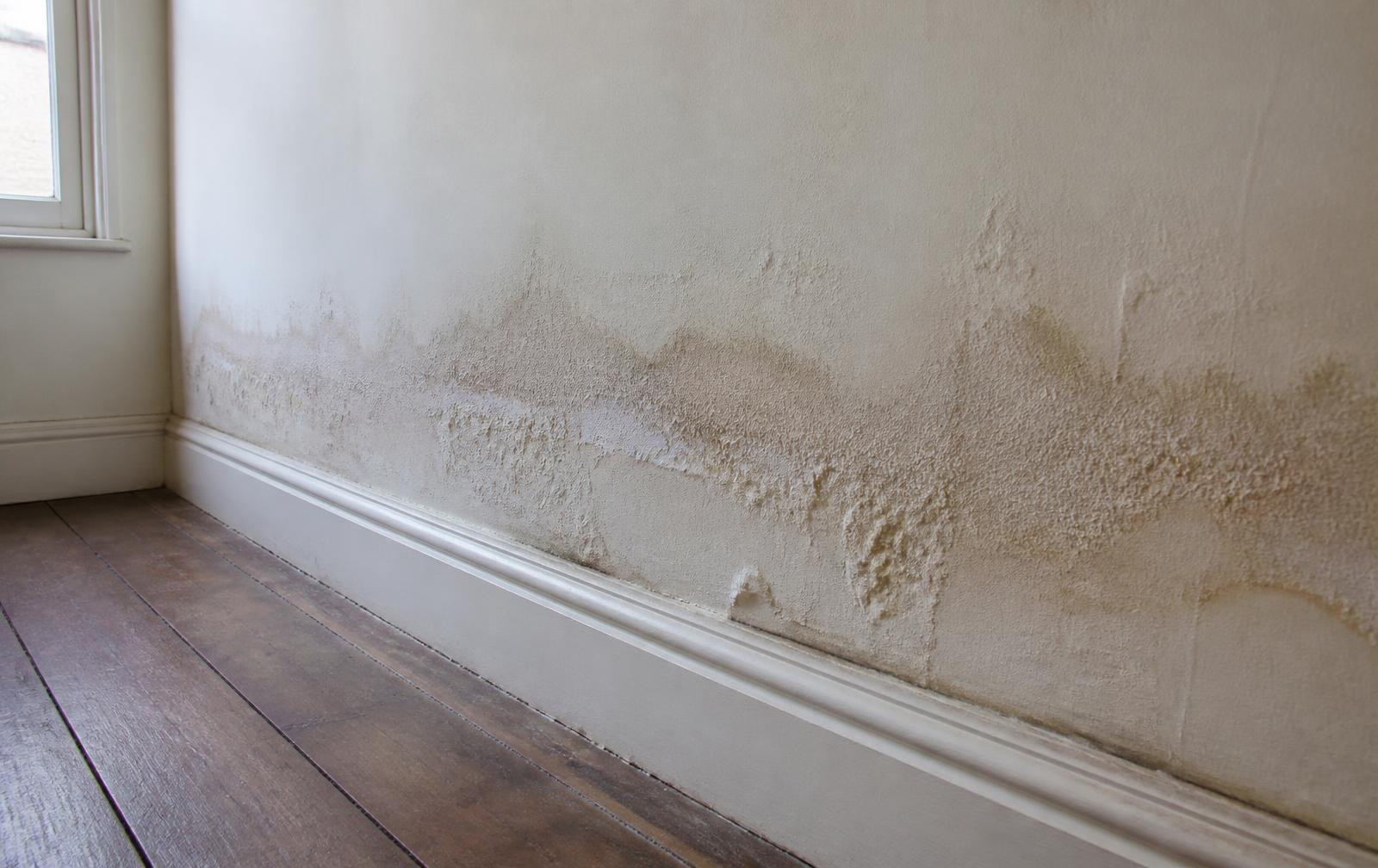
Rising damp usually shows as a tide mark on the lower part of a ground floor wall, rarely more than a metre or so above the skirting. The plaster can feel cold and gritty, and you will often see white, fluffy salts left behind as moisture dries out of the wall. It happens when groundwater travels up through the brickwork because the original damp proof course has failed, was never fitted, or has been bridged by raised ground, paths or flower beds outside.
Condensation behaves differently. It forms when moist air settles on cold surfaces, so it tends to appear on window reveals, external corners, behind furniture and in rooms with poor airflow. It usually comes with black mould spots, it can show up on any floor of the house, and it is often worst in bedrooms and bathrooms first thing in the morning. If the patches are high up, around windows or on the ceiling, condensation is the more likely culprit. It also tends to ease off when heating and ventilation improve, whereas true rising damp stays put whatever you do with the thermostat.
North East housing stock makes this mix up even more common. Tyneside flats, Victorian terraces and post war semis all have solid or early cavity walls that run cold, and many have had old air bricks blocked or chimneys capped over the years. Less ventilation plus cold walls is exactly the recipe for condensation, while those same older walls often have a slate or bitumen damp proof course that has simply reached the end of its life. Both can be true in the same house at the same time, which is why guessing from a photograph rarely ends well.
Getting this right matters because the treatments are not interchangeable. Rising damp is dealt with by installing a new chemical damp proof course and replastering to a salt resistant specification, which you can read about on our damp proofing page. Condensation is controlled through ventilation, insulation and proper mould treatment, covered under mould removal and condensation control. Treating one as the other wastes money, and the problem comes straight back within a season.
There are a couple of simple checks you can do yourself. Run your hand over the wall first thing in the morning: condensation tends to leave the surface wet with fine droplets, while rising damp leaves it cold and clammy with visible salt crystals. Then look outside. If soil, paving or a flower bed sits above the damp proof course line, roughly 150mm above ground level, that alone can cause patches that look exactly like rising damp but cost very little to put right.
The reliable way to be sure is a proper survey, with moisture readings mapped across the wall and a check of the external ground levels, which is exactly what our damp survey reports provide. We carry them out across North Shields, Newcastle, Northumberland and County Durham, and you can confirm your location on our areas we cover page before booking. If it turns out to be condensation, we will tell you the simple things to try first, because plenty of cases improve without any remedial work at all.
Not sure which one you are looking at? A survey costs nothing and takes under an hour, and it replaces guesswork with a written answer you can act on. Book a free survey and we will confirm the cause in writing before anything is priced.