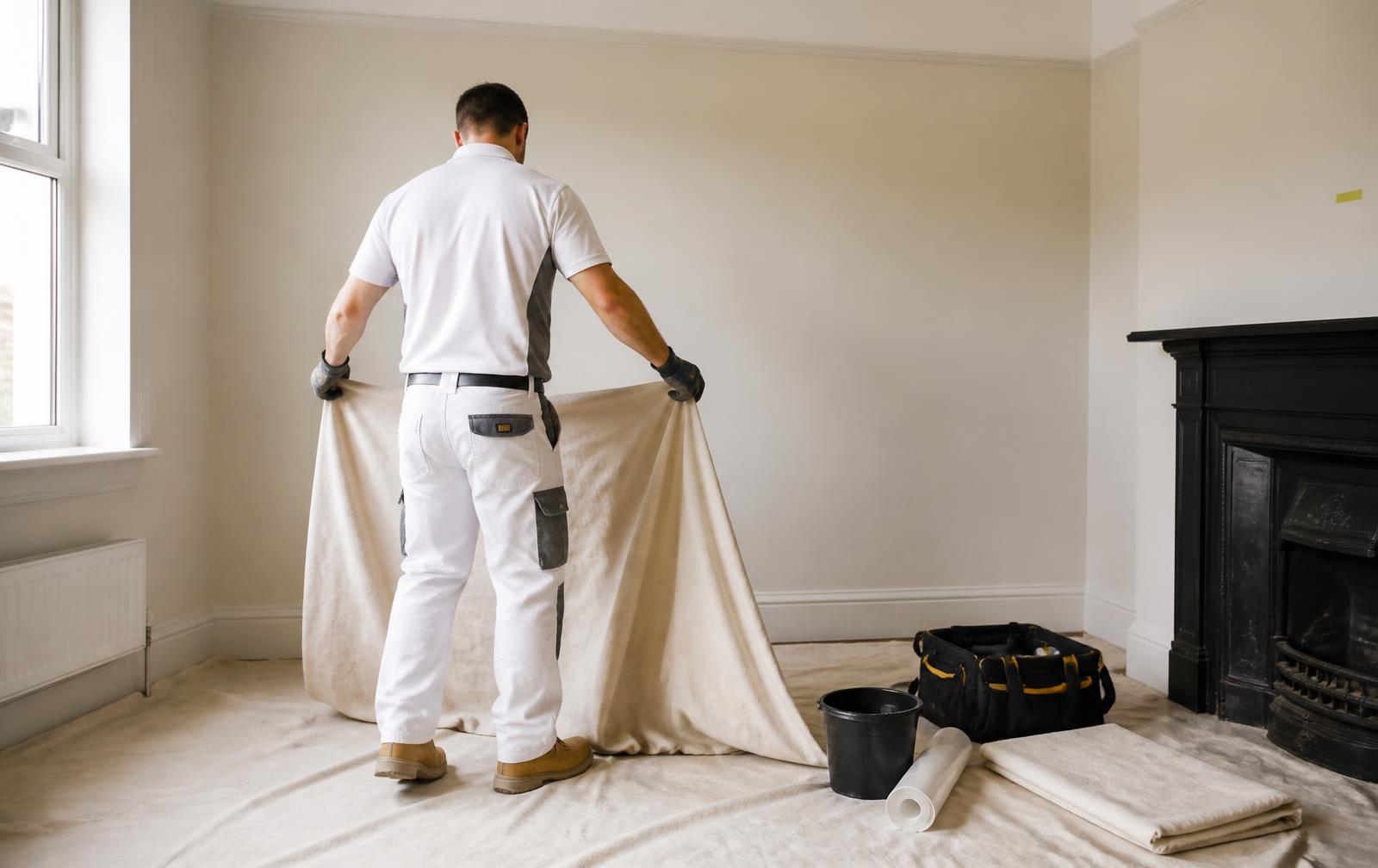
What happens during a damp survey
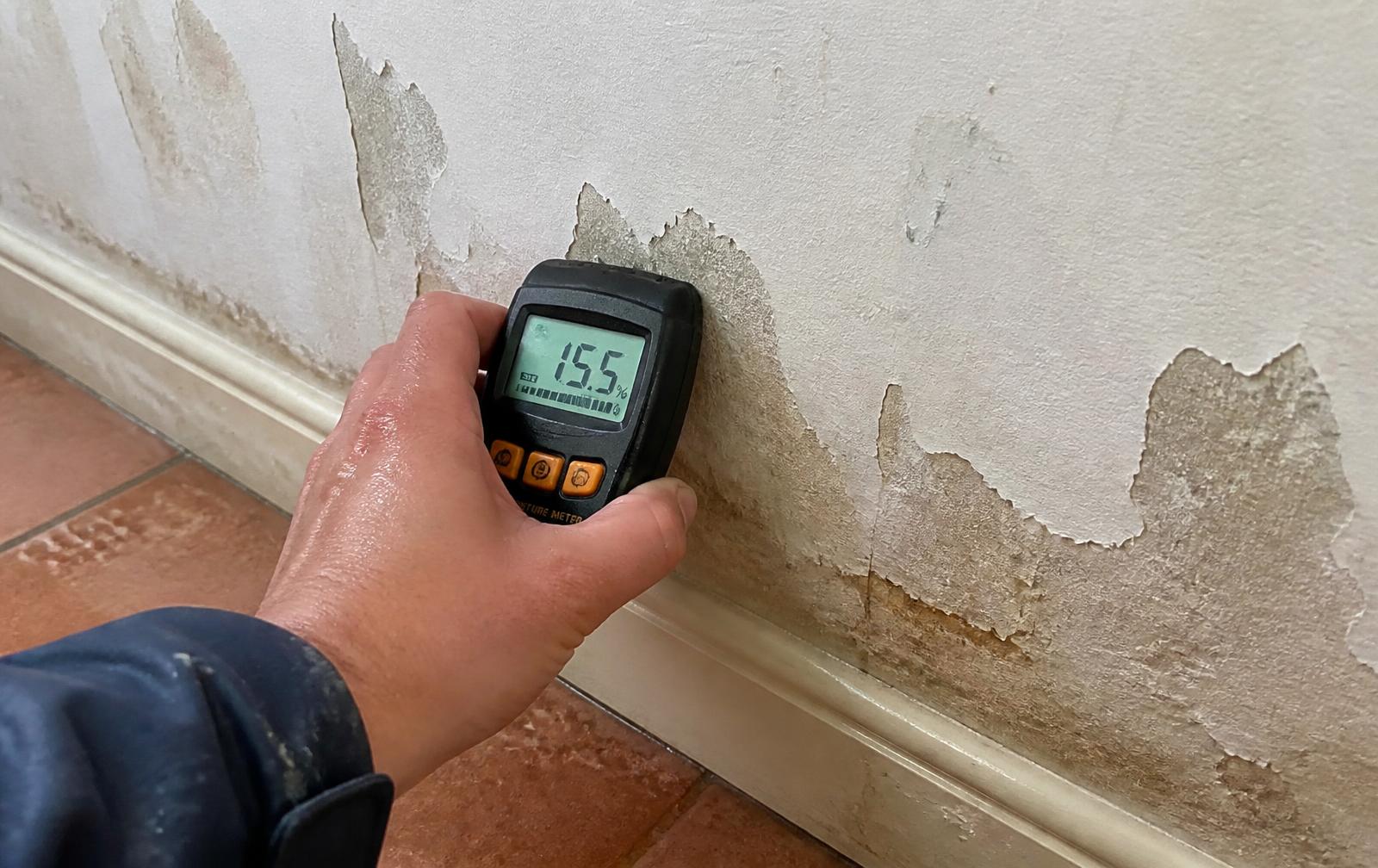
Most surveys take between 45 minutes and an hour for a typical house, and longer for larger or older properties. You do not need to move furniture or clear rooms, although reasonable access to the affected walls helps us get accurate readings. If you have photographs of how the problem changes through the year, keep them to hand, because seasonal patterns tell us a great deal.
Before we arrive, it helps to think about when the problem is worst. Damp that appears after heavy rain suggests penetrating damp through the wall fabric. Damp that is worse in cold weather regardless of rain leans towards condensation. Damp that creeps steadily up from the skirting line points towards the damp proof course. None of this replaces the survey, but it means you can tell us the pattern and we can test the right theory first.
We start outside, because a surprising amount of internal damp is caused by external defects. Gutters, downpipes, pointing, render, ground levels and air bricks all get checked before we step through the door. A bridged damp proof course, where raised paving, soil or a flower bed sits above the original damp proof course line, is one of the most common findings, and it is often the cheapest fix of the lot.
Inside, we take moisture readings across the affected walls with an electronic meter, map the pattern of the results and check the plaster for salts. The pattern matters far more than any single number, because rising damp, penetrating damp and condensation each leave a different signature across a wall. A tide mark low down with salting points one way, damp patches that appear high up after rain point another, and surface moisture in cold corners points a third.
Where timber is involved, we probe skirtings, floorboards and any accessible joists for decay and insect attack. If we find signs of beetle activity or soft timber, our woodworm treatment page explains how that is dealt with. In cavity wall properties we also look for horizontal cracking or bulging brickwork that can point to corroding wall ties, which is a separate issue covered under wall tie replacement.
Afterwards you get a written report. It sets out what is causing the problem, what needs doing to fix it properly and a fixed price for the work, broken down so you can see where the cost sits. If the answer is something simple like clearing a gutter or improving ventilation, the report says that too. Nothing is priced before the cause is confirmed, there is no obligation to go ahead, and the report is yours to keep either way. Where treatment is needed, the report also notes the guarantee that applies, so you know the work is covered long after we leave.
You can also expect honesty about what does not need doing. Around a third of the surveys we carry out end with advice rather than a quotation, because the cause turns out to be a blocked gutter, a bridged damp proof course or a ventilation issue that costs little to sort. That is part of the job. A survey that finds nothing serious is a good result, and it still costs you nothing.
Surveys are free across North Shields, Tynemouth, Whitley Bay, Newcastle and the wider North East, and most are booked within a few working days. Check the areas we cover page if you want to confirm your location, or get in touch and we will talk you through exactly what a survey involves for your property.
Surveys are free across North Shields, Newcastle and the wider North East. Get in touch and we will usually book you in within a few working days.