
Condensation and black mould: getting ahead of it before winter
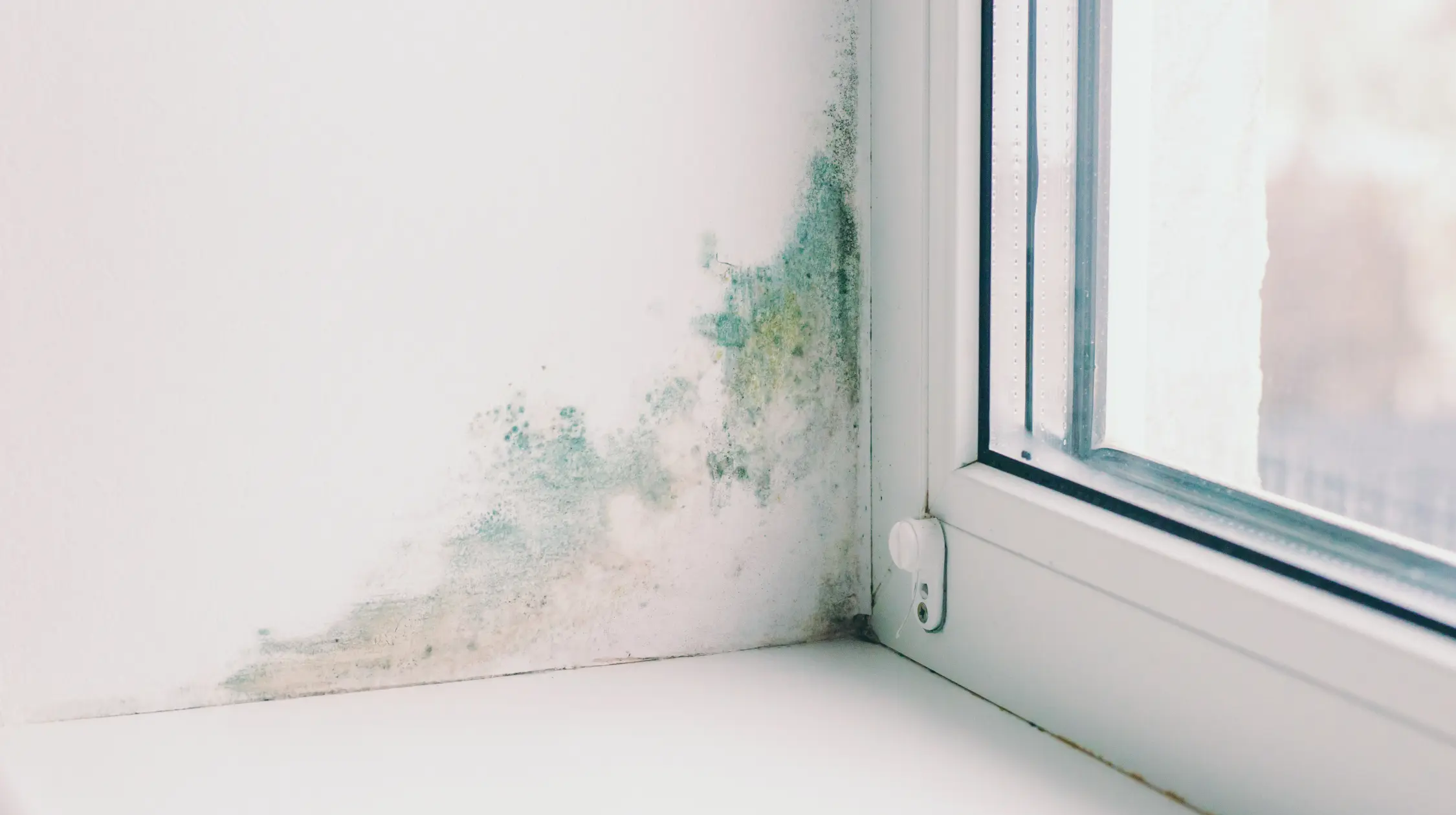
Every year the calls change with the weather. Through the summer we mostly survey rising damp and timber decay. From October onwards the phone fills up with black mould around windows, in bedroom corners and behind wardrobes on external walls. In the majority of those cases the cause is condensation rather than moisture coming through the structure, and the work needed is completely different.
Condensation happens when warm, moist air inside the house meets a cold surface and gives up its moisture. A family of four puts several litres of water into the air every day through cooking, washing, drying clothes and simply breathing. In a well ventilated house that moisture leaves. In a house with sealed chimneys, blocked air bricks, trickle vents painted shut and windows kept closed against the cold, it stays and lands on the coldest surfaces it can find.
That is why the pattern is so recognisable. Mould on window reveals and in external corners, worst in bedrooms first thing in the morning, appearing on any floor of the house rather than just at skirting level. Rising damp behaves nothing like that, as we set out in our post on telling rising damp from condensation. If the patches are high up or around glazing, you are almost certainly looking at condensation.
North East housing makes it worse. Tyneside flats, Victorian terraces and solid walled properties in North Shields, Wallsend and the Newcastle suburbs run cold, and decades of draught proofing have removed the accidental ventilation those buildings were designed around. Coastal properties in Tynemouth and Whitley Bay get the added problem of salt laden air and exposed elevations that hold the chill.
There are sensible things to do before spending anything. Keep a low background heat rather than short blasts, because a wall that never warms up will always attract moisture. Open trickle vents and clear any blocked air bricks. Use extractor fans while cooking and showering and for a few minutes afterwards, and keep bathroom and kitchen doors shut while you do. Dry washing outside or in a ventilated room rather than on radiators, and leave a gap behind furniture on external walls.
Where those steps are not enough, the fix is mechanical. Positive input ventilation, humidity sensing extraction and treatment of the affected surfaces are all covered on our mould removal and condensation control page. Wiping mould off with bleach clears the appearance but not the cause, so it comes back in the same spot within weeks.
The one thing worth ruling out first is structural damp hiding behind a condensation problem. A leaking gutter, defective pointing or a bridged damp proof course will make a wall permanently cold and wet, and no amount of ventilation will fix that. A short survey settles it either way, and our damp survey reports set the answer out in writing with a fixed price if any work is needed.
We carry out condensation surveys across North Shields, Newcastle upon Tyne, Whitley Bay and the wider region. The full list is on our areas we cover page. Booking now rather than in January usually means a shorter wait and a warmer house before the cold sets in.
Common questions
Mould appearing again as the weather turns? Book a free survey and we will confirm whether it is condensation or something structural before anything is priced.